Latest Transmission & Distribution Articles
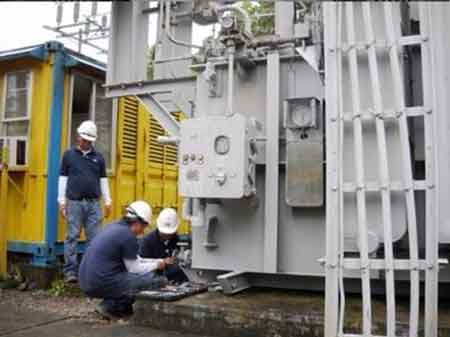
How To Test a Transformer Explained
Learn how to test a transformer: insulation resistance, TTR, winding resistance, polarity, continuity, and dielectric checks. Confirm condition, find faults, and keep safe with a multimeter, megohmmeter, and clear procedures for field work on site.
Testing a Transformer is a Practical Process
Testing a transformer is a practical process used to verify its electrical integrity, safety, and overall condition by performing standard diagnostic tests and comparing the results with the nameplate data and manufacturer limits. The process begins with strict safety controls, including de-energizing the unit, applying lockout/tagout procedures, discharging stored energy, and verifying the absence of voltage.
Technicians…
View more
Sign Up for Electricity Forum’s Transmission & Distribution Newsletter
Stay informed with our FREE Transmission & Distribution Newsletter — get the latest news, breakthrough technologies, and expert insights, delivered straight to your inbox.
Substation Grounding - Ensuring Electrical Safety
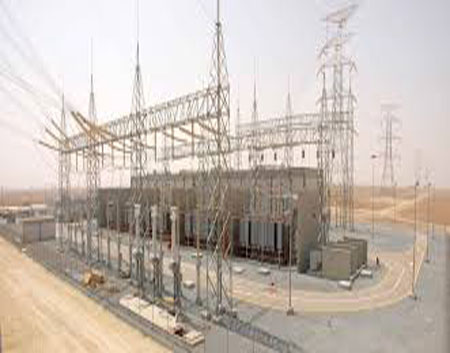
Substation grounding is the engineered network of conductors and electrodes that safely dissipates fault current into the earth, stabilizes voltage reference, and protects personnel and equipment inside high-energy electrical substations.
Because substations concentrate large fault levels within confined physical space, grounding is not a secondary safety feature. It is the structural system that determines how electrical energy behaves during abnormal events. The same principles that govern general electrical grounding apply here, but the consequences of error are far greater.
In practical terms, substation grounding controls step voltage, touch voltage, and fault current return paths so that protective devices can operate…
View more
Power Transformers Health Check- Human Analogy
Power transformers health check leverages condition monitoring, diagnostics, DGA oil analysis, thermography, and predictive maintenance to assess insulation integrity, detect faults, optimize reliability, reduce risk, and extend asset life-cycle across critical grids.
Power Transformers Health Check Overview and Best Practices
Power transformers are static electric machines used to step-up or step-down voltage in electric power applications. The capital cost of a power transformer in the range of 100MVA can be $1M or more and by the time it is under operation, the price is increased. The average age of installed large power transformers (LPTs) in the United States is…
View more
Advancements in DGA Data Quality
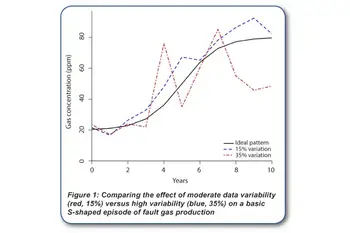
Advancements in DGA data quality strengthen transformer diagnostics through disciplined oil sampling, sensor calibration, laboratory consistency, and data governance. Reliable gas trends reduce false alarms and support confident condition assessment.
Why Advancements in DGA Data Quality Matter
When transformer diagnostics fail, the cause is often not interpretation, but trust. Dissolved gas analysis depends on trend credibility, not just concentration values. Without consistent sampling, stable measurement practices, and disciplined data handling, even the most advanced diagnostic models operate on uncertain ground.
Advancements in DGA data quality focus on protecting that foundation. They address how gas data is captured, preserved, normalized,…
View more
Dissolved Gas Analysis Advancements Explained
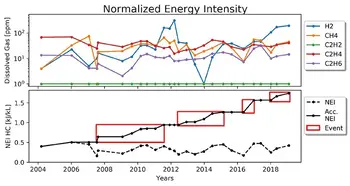
Dissolved gas analysis advancements improve transformer diagnostics through energy-based indices, disciplined sampling, and stronger trend validation. They reduce false alarms and clarify fault severity for utility transformer maintenance.
Dissolved gas analysis advancements improve transformer diagnostics through energy-based indices, disciplined sampling, and stronger trend validation. They reduce false alarms and clarify fault severity for utility transformer maintenance.
Modern transformer DGA work no longer begins with ratios or graphical tools. It begins with a quieter but more consequential question: Does the gas data itself show credible evidence of active insulation breakdown? Without that foundation, every subsequent interpretation method is only a decoration…
View more
Cable Cleats Testing - Crucial to Cable Management
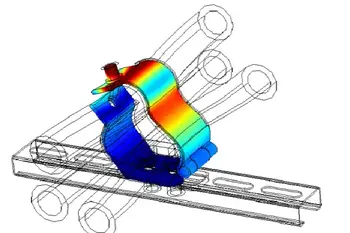
Cable cleats provide mechanical restraint for LV/MV/HV cables, securing bundles against short-circuit forces on ladder trays and cable ladders, compliant with IEC 61914, in stainless steel or polymer for industrial electrical installations.
Cable Cleats Explained: What You Need to Know
Essentially, cable cleats are devices designed to secure cables and to ensure the retention and support of them, reducing the load that the cable may be exposed to under its own weight. They are also designed to contain the cables under fault conditions, protecting the cables and the cable management system from damage. Following best practices for cable handling…
View more
Digital Grid Solutions in Utility Control Architecture
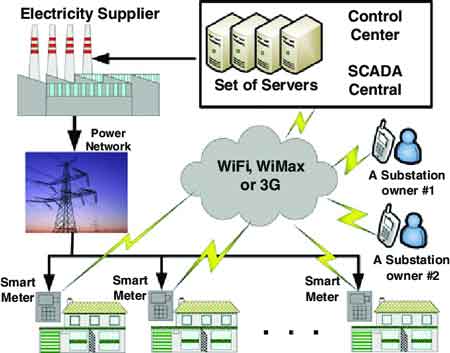
Digital grid solutions determine whether a control room action stabilizes or destabilizes a feeder, integrating SCADA, data analytics, grid cybersecurity strategy, and smart grid communication to govern real-time DER coordination and operational resilience.
Digital grid solutions determine whether a control room action stabilizes or destabilizes a feeder. In modern distribution networks saturated with DER, inverter backfeed, and high endpoint density, a misclassified system state can trigger automated switching that amplifies rather than contains disturbance.
This is not a modernization discussion. It is a governance discussion. When topology confidence drops below operational tolerance, every automated action becomes a risk multiplier.
Transmission…
View more