Latest Industrial Electrical Power Articles
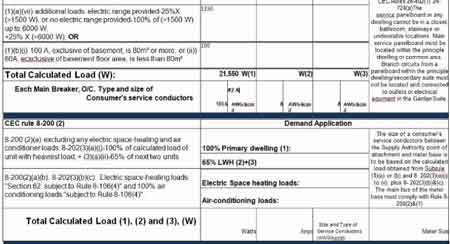
Electrical Load Calculator Explained
Electrical load calculator estimates power demand, ampacity, and panel capacity, guiding circuit sizing, load balancing, voltage drop checks, and NEC-compliant design for residential, commercial, and industrial electrical projects, planning safely.
Understanding How an Electrical Load Calculator Works
An electrical load calculator is an essential tool for industrial and commercial power professionals. These calculators help determine the total electricity consumption of a facility, playing a crucial role in ensuring safe and efficient system operations. By using one, engineers and technicians can accurately assess the total load to properly size critical equipment like transformers, conductors, and circuit protection devices. This process…
View more
Sign Up for Electricity Forum’s Industrial Electrical Power Newsletter
Stay informed with our FREE Industrial Electrical Power Newsletter — get the latest news, breakthrough technologies, and expert insights, delivered straight to your inbox.

Arc Flash Burn Photos - Don't Let This Be You
Arc flash burn photos illustrate electrical safety hazards, incident energy effects, and injury mechanisms, supporting NFPA 70E compliance, PPE selection, risk assessment, and lockout-tagout training for engineers, electricians, and safety managers.
Arc Flash Burn Photos Explained: What You Need to Know
Arc flash burn photos graphically illustrate the severe injuries that can result from arc flash incidents, highlighting the critical importance of safety protocols in the electrical industry. These photos are intended to show the devastating effects of arc flash burns on the human body, offering a sobering reminder of the potential consequences when safety measures are neglected. Electrical…
View more
What is a Megohmmeter? A Great Testing Tool
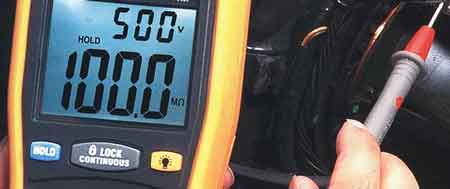
What is a megohmmeter? An insulation resistance tester that applies high DC voltage to measure gigaohms, detect leakage current and dielectric integrity in cables, motors, transformers, and switchgear for safety, commissioning, and preventive maintenance.
What Is a Megohmmeter?
What is a megohmmeter, and why should every electrical professional understand its importance? This specialized tool, also known as an insulation resistance tester, is critical for ensuring the safety and reliability of electrical systems in industrial, commercial, and institutional settings. By measuring high resistance values in electrical insulation, it helps detect potential faults, prevent equipment failures, and minimize costly downtime. In…
View more
Different Types of Transformers
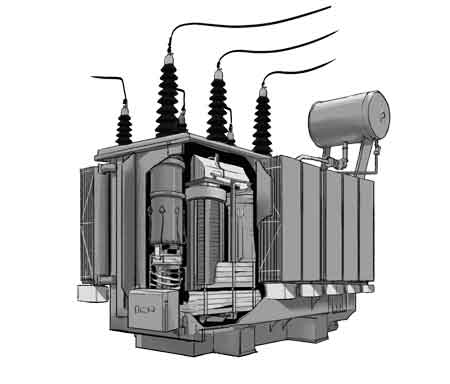
Different types of transformers include power, distribution, isolation, and instrument transformers. Each type serves unique roles in voltage regulation, electrical isolation, and energy transmission within power systems for industrial, commercial, and residential applications.
Understanding Different Types of Transformers: Principles and Applications
Understanding the different types of transformers is vital for professionals responsible for designing, operating, and maintaining electrical infrastructure. Each type of transformer is engineered to perform specific functions, such as stepping up or stepping down voltage, isolating circuits, or providing accurate measurement and protection in substations. Mastering the differences between them enables electrical engineers and maintenance teams to…
View more
Delta Wye Transformer Behavior in Real Distribution Systems
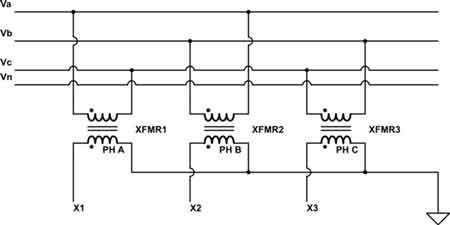
A delta wye transformer converts three phase power from a delta primary to a wye secondary to produce a grounded neutral for systems such as 208Y/120V. The connection introduces a 30 degree phase shift and helps contain triplen harmonics while stabilizing line to neutral voltages.
A delta wye transformer is chosen less for theory than for practicality. It creates a usable four-wire secondary with a stable neutral while keeping upstream systems insulated from downstream imbalance, harmonics, and grounding behavior. What matters is not that it steps down the voltage, but that it defines a boundary where real-world loads begin to…
View more
Power Factor Correction Sizing and Harmonic Risk Control
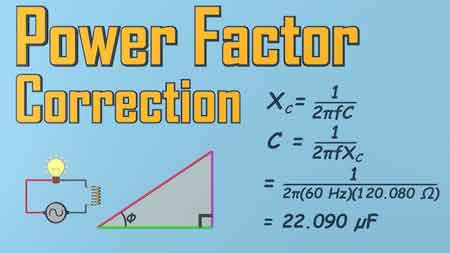
Power factor correction governs reactive power flow, kVAR sizing, capacitor banks, detuning reactors, and exposure to harmonic distortion. Improper compensation can trigger resonance, transformer overheating, utility penalties, and voltage instability in industrial systems.
Industrial facilities do not install capacitor banks to improve textbook efficiency. They install them to control demand penalties, stabilize bus voltage under inductive load, and prevent excessive reactive current from consuming transformer capacity. The decision is not about improving the power factor. The decision is how far to implement power factor correction without destabilizing the system.
In motor-dominated plants, lagging power factor below 0.90 can trigger utility…
View more
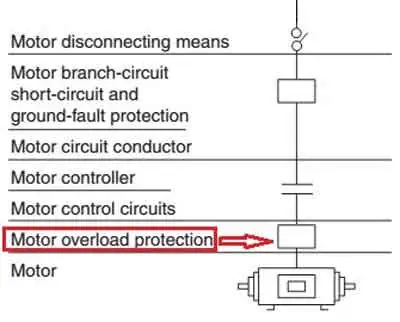
Motor Overload Protection Explained
Motor overload protection safeguards electric motors from sustained overcurrent and heat buildup using overload relays and coordinated protection. It prevents insulation damage and premature failure while working alongside short-circuit devices.
Motor overload protection prevents electric motors from overheating under sustained excess current conditions that do not qualify as faults. In practice, this protection becomes critical in applications where motors operate close to their thermal limits for extended periods.
Unlike short-circuit protection, which reacts instantly to catastrophic electrical faults, overload protection responds to time and temperature. That distinction matters. Most motors do not fail because of dramatic electrical events. They fail…
View more