Latest Industrial Electrical Power Articles
How do I prevent an arc flash from happening?
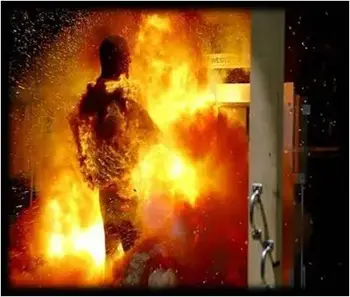
Prevention requires electrical safety training, proper PPE, arc flash boundaries, and equipment maintenance. Following NFPA 70E standards, safe work practices, and risk assessments reduces hazards and protects workers from dangerous incidents.
How Do I Prevent an Arc Flash from Happening?
Wondering how to prevent an arc flash from happening? Arc flash prevention begins with a proper risk assessment, thorough training, and adherence to electrical safety standards, such as NFPA 70E. Using the right personal protective equipment (PPE), maintaining equipment, labelling hazards, and de-energizing circuits before work are all key steps in minimizing the risk of an arc flash incident. …
View more
Sign Up for Electricity Forum’s Industrial Electrical Power Newsletter
Stay informed with our FREE Industrial Electrical Power Newsletter — get the latest news, breakthrough technologies, and expert insights, delivered straight to your inbox.
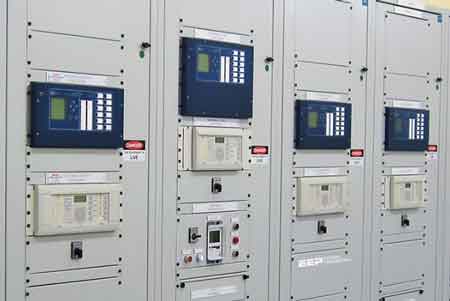
What Is Electrical Protection?
Electrical protection safeguards people, equipment, and power systems by preventing hazards like short circuits, overcurrent, ground faults, surges, and arc faults. It relies on protective devices, relays, and compliance with electrical safety standards.
What is Electrical Protection?
In modern power systems, electrical protection is not optional. It is a fundamental requirement, written into codes and standards worldwide. From residential circuits to industrial substations, protective measures make the difference between safe, reliable operation and dangerous failures.
System protection relies on electrical devices such as circuit breakers and fuses to safeguard every electrical circuit. These protective components detect overloads and short…
View more
Low Voltage Certification Explained
Low voltage certification is formal training that qualifies workers to work on electrical systems under 750 volts safely. It covers safety procedures, regulatory standards like NFPA 70E, and hands-on practices to prevent electrical shock and arc flash incidents.
Low Voltage Certification Fundamentals
✅ Demonstrates professional competency and readiness to meet state requirements
Low voltage certification is a credential that verifies an electrician or technician has completed specific training to work safely around electrical systems typically rated under 750 volts. This includes commercial lighting, control panels, communication equipment, and specialized low-voltage systems such as fire alarm systems, access control systems,…
View more
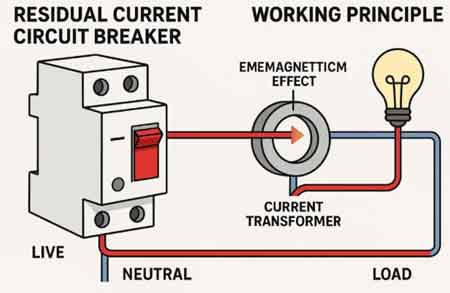
Residual Current Circuit Breaker: A Signal, Not a Safeguard
A residual current circuit breaker detects current imbalance, not overload or short circuits. Its value lies in what it reveals about hidden fault paths, and its limits matter as much as its protection.
Residual current circuit breakers (RCCB) play a narrow but important role in electrical protection. They are frequently specified, often misunderstood, and regularly credited with capabilities they were never intended to provide. Their real function is not to stop catastrophic faults, but to expose subtle electrical conditions that other devices are designed to ignore.
Rather than responding to the current magnitude, a residual current circuit breaker observes a…
View more
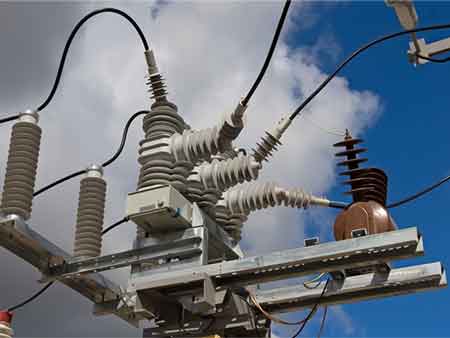
What does an Auto Recloser do? HV Electric Switch
What Does an Auto Recloser Do? It monitors distribution lines, interrupts faults like overcurrent, automatically recloses, and isolates persistent faults, improving grid reliability, reducing outages, and integrating with SCADA and protection relays as smart switchgear.
What Does an Auto Recloser Do?
What does an auto recloser do? Essentially, an auto recloser is a high-voltage electric switch that acts as a smart circuit breaker within a power distribution system. It senses disturbances in the flow of electric power, such as a short circuit or ground fault, and automatically shuts off the power to isolate the fault. This helps prevent damage…
View more
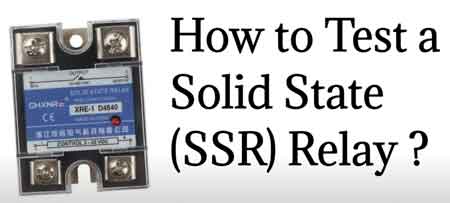
How to Test a Solid State Relay?
A solid state relay can fail without visible damage, leaving loads energized, unresponsive, or unstable. Testing confirms whether the control input, switching action, and output path respond correctly, helping prevent silent failures that cause equipment damage, control errors, or unexpected downtime.
What Proper Solid State Relay Testing Confirms
Use a multimeter to test a solid state relay by checking the input voltage, output continuity, and switching function. When the correct control voltage is applied across the input terminals, the relay should change state and allow current to flow through the output. Regular testing helps detect early signs of failure…
View more
High-Efficiency UPS Systems
High Efficiency UPS Systems deliver double-conversion protection, low THD, high power factor, intelligent battery management for data centers, ensuring clean power, reduced losses, redundancy, advanced SNMP monitoring, and remote alerts.
How High-Efficiency UPS Systems Work
Energy efficiency for uninterruptible power supply (UPS) equipment is so important because they can influence UPS energy efficiency and can directly impact energy costs. This paper will compare the differences in energy efficiencies among various UPS topologies available today through laboratory testing. These studies demonstrate flywheel—based UPS technology achieves much higher efficiency ratings as compared to legacy battery based UPS systems, resulting in substantial…
View more